Book Nook Kits for Kids: Age-by-Age Guide (2026)
BookNookKit.diy Editorial Team
Updated June 29, 2026 · 8 min read · 40+ kits researched
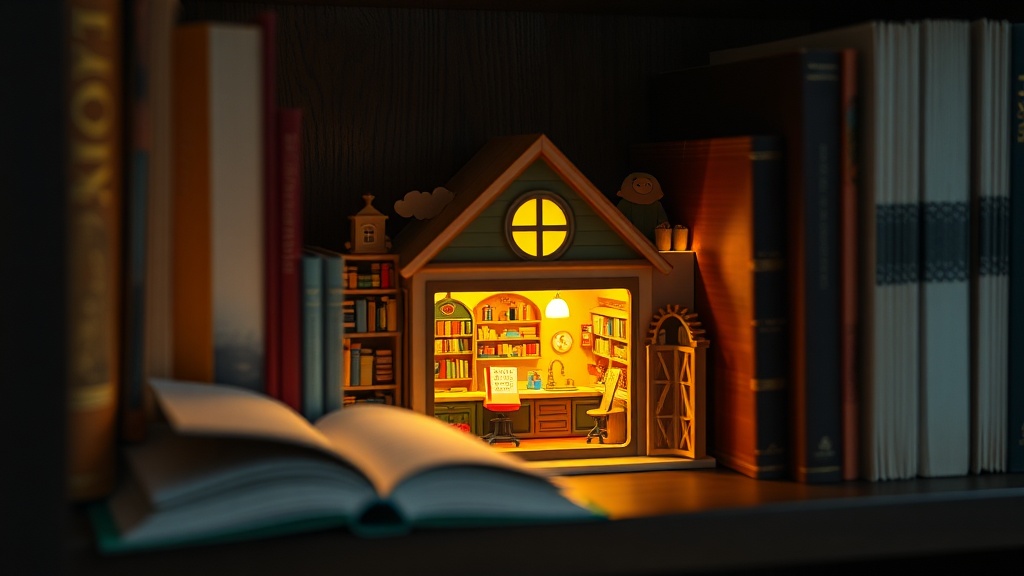
The short answer: most book nook kits are not designed for young children, but several work very well as supervised parent-and-child builds, and older children (12+) can tackle beginner-level kits independently with excellent results. Here is the honest, age-by-age picture.
The safety reality — why age matters here
Before we look at specific kits, there are three genuine safety factors that the listings rarely spell out clearly:
- Small parts. Every book nook kit contains pieces small enough to be a choking hazard for children under 8. The tiny miniature furniture, paper elements, and acrylic beads are sized for adult craft work. Most packaging carries a "not for children under 14" or "under 12" warning — look for it.
- Craft knife work. Some kits require a craft knife to clean up tab edges or trim paper. This tool is not appropriate for younger children and should always be handled by an adult even when a teenager is building.
- Glue. White PVA (wood glue) is safe, but it needs adult supervision for younger children. Some kits include stronger adhesives.
None of this makes book nooks off-limits for children. It means the build needs to be calibrated to the child's age — adult-led for younger children, supervised for middle-school age, and more independent for teens.
Age-by-age guide
Under 8: not recommended as a kit activity
Small parts and glue work make standard book nook kits unsuitable for this age group. If you want a miniature-scene craft activity for younger children, look for kits marketed specifically as under-8 projects — these typically use larger foam or felt pieces and non-toxic, no-drip glue sticks rather than laser-cut wood and PVA.
Alternatively, a completed book nook on display can be enjoyed by younger children as a light-up decoration — they love the glow — without involving them in the build itself.
Ages 8–10: adult-led parent-child build
At this age, a book nook kit works well as a guided activity where an adult does the craft-knife work and manages the glue, while the child places pieces, chooses where things go, and positions the miniature furniture. Think of it less as the child building a kit and more as a shared weekend project where the child is the creative director and you are the hands.
What works at this age:
- Choosing the theme together (kids this age have strong opinions — involve them fully in the choice).
- Punching pieces out of the sheet (adult checks for pieces that need knife work first).
- Applying glue from a toothpick under adult guidance.
- Placing small furniture and paper elements with tweezers (children often love this precision work).
- Positioning the LED strip and turning on the finished kit — a real moment for this age group.
Best themes for ages 8–10: fantasy and magic themes generate the most excitement (a glowing wizard alley between the bookshelf is endlessly fascinating), followed by garden and fairy-tale scenes. Bookshop themes tend to engage more from age 10 upwards.
Stick to kits with under 200 pieces for this age group. The build should be completable in one or two sessions — a child's interest in an unfinished project diminishes quickly if it stretches into weeks.
Ages 11–13: supervised independent build
This is the sweet spot where book nook kits start to work very well. Children in this age range have the fine motor skills, patience, and ability to follow illustrated instructions that these kits require. The build itself — methodical, hands-on, produces a clear result — suits this age group well as a screen-free weekend activity.
At this age, the adult role shifts to:
- Handling the craft knife (still not appropriate for independent use without prior craft experience).
- Being available to help with the LED wiring step, which some first-timers find confusing.
- Checking in on progress rather than directing it.
Children in this range can handle kits in the 150–250 piece range. Bookshop, library and café themes work particularly well for avid readers. Japanese scene kits are popular with this age group too, especially those interested in anime or Japanese culture. Castle kits appeal to fantasy fans but should be checked for piece count — aim for under 250 for a first build.
Confidence from completing one kit almost always leads to wanting a second. Once a child has finished a beginner kit successfully, they will typically have clear opinions about what theme they want next — which makes subsequent gifts very easy to plan.
Ages 14+: independent builder
From 14 upwards, a child can follow the same guidance as an adult beginner. Our beginner book nook kits guide applies directly. The primary considerations at this age are:
- Piece count under 300 for a first build.
- A theme the teenager actually wants on their shelf (let them choose).
- Clear English instructions from a reputable brand.
Teenagers who enjoy model kits, Lego, cross-stitch, or other detailed crafts typically take to book nooks very quickly. Those who are not usually drawn to craft activities may still engage if the finished result appeals strongly — the LED glow and the miniature world effect is often compelling even for craft-resistant teens.
What makes a kit more child-friendly
Not all kits at the same piece count are equally appropriate. Here's what to look for:
Pre-printed paper elements (not paint-your-own)
Kits where the paper scenery comes pre-printed and ready to glue are far more appropriate for children than kits where elements must be painted or coloured. Painting miniatures is a separate and harder skill. Always confirm pre-printed in the listing or listing photos before buying.
No craft-knife-required steps in core assembly
Better kits have clean laser cuts where all pieces pop out of their sheets with finger pressure. Check reviews for mentions of "no cutting needed" or "clean fit." Kits where reviews frequently mention needing to trim pieces are better saved for adult builds.
Clip-in or pre-routed LED systems
LED wiring is the step that causes most confusion. Kits with pre-routed or clip-in LED systems are much more forgiving for younger builders than those requiring threading the strip through narrow interior channels before sealing. Check listing photos to see how the LED runs.
Lower piece count with larger average piece size
100–200 pieces with pieces visible in listing photos is ideal. A kit with 150 large-format pieces is far more manageable than a 150-piece kit where half the pieces are 5mm furniture details.
Recommended themes and brands for children
For ages 8–10 (parent-led):
- Magic and fantasy themes — a glowing wizard alley has the highest wow-factor at this age. Browse the magic & fantasy collection.
- Garden and fairy-tale themes — the garden collection and fairy tale nooks use paper flowers and foliage elements that children enjoy placing.
For ages 11–13 (supervised independent):
- Bookshop and library themes from CUTEBEE or Rolife — the clearest instructions in the category, forgiving build structure. The CUTEBEE Owl Bookstore is a proven first build. Browse library & bookstore nooks.
- Harry Potter themes — if the child is a Potter fan, a themed kit is a guaranteed motivator. See our Harry Potter book nook guide.
- Japanese scene kits — popular with anime fans. Browse the Japanese collection, but check piece count and avoid very high-paper-count kits for first builds.
For ages 14+: any kit in our beginner picks is appropriate. Let the teenager choose the theme.
Brands to trust: CUTEBEE and Rolife consistently deliver the clearest instructions and most precise laser cuts — the two factors that matter most when a child is following a manual without much adult guidance. For a full brand comparison, see our brand guide.
Book nooks as a parent-child activity
Some of the most memorable builds we have done have been shared with a child. The division of labour works naturally: children are often faster and more enthusiastic about the detail-placement stages — tiny furniture, paper signs, flower pots — than adults, while parents handle the structural and cutting work.
If you plan a parent-child build, a few things help:
- Set up the workspace with good lighting before the child arrives (they lose interest while adults are still setting up).
- Read the manual together first — explain the stages in plain language before starting.
- Designate clearly which steps are yours (craft knife, tricky glue joints) and which are theirs.
- Build across two sessions if the kit is mid-range size — ending the first session before frustration sets in and coming back the next day is almost always better than pushing through.
The finished piece on the child's shelf — something they helped build and can show others — has a durability and pride that most gifts lack. Three years on, our own first parent-child build is still on the shelf and still talked about.
Ready to choose? If the recipient is 11 or older, our beginner kit guide has specific picks that work for first-time builders of all ages. For a broader theme overview, our best book nook kits roundup covers all categories. Still on the fence? Our honest worth-it guide covers the full value question.